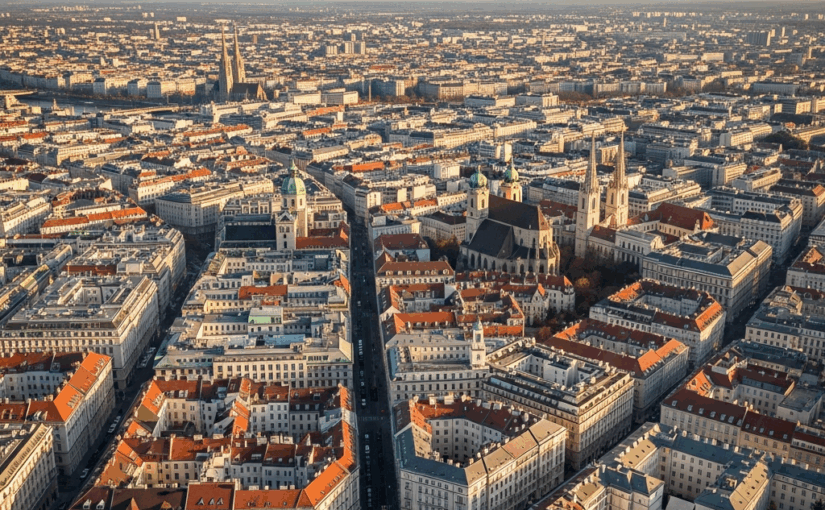
Let me tell you something about Vienna that the tourist guides won’t: this city doesn’t reveal itself all at once. Unlike other European capitals where life clusters around one central square, Vienna spreads its distinct character across 23 districts (Bezirke), each with its own rhythm, history, and unwritten rules.
I’ve spent countless afternoons wandering from the imperial silence of the 1st district to the grittier, vibrant streets of the 15th, and here is what I have learned: choosing where to live in Vienna isn’t just about finding an apartment. It is about defining who you want to be in this city. Do you want the Sunday morning silence of a wine village, or the late-night falafel and street art of an urban hub?
When I first arrived, I made the classic expat mistake: assuming the district map was a hierarchy where “lower number” meant “better.” That is simply not true. The trick is matching Vienna’s diverse inventory to your actual daily needs, not just the architecture that looks best on Instagram.
Understanding Vienna’s District System
Vienna is organized in a spiral, unfurling from the historic center (District 1) outward to District 23. You can instantly identify a location by its postal code: the middle two digits indicate the district. 1010 is the first district; 1180 is the 18th.
However, the “Outer vs. Inner” distinction—historically defined by the Gürtel, a busy belt road—is blurring. While districts 1 through 9 constitute the “Inner City,” the quality regarding livability is not strictly linear. I know locals who would never trade their villa in the 19th (Döbling) for a penthouse in the 1st, and students who find the 15th (Rudolfsheim-Fünfhaus) far more vibrant than the polished 8th.
Also, be aware of the “Grätzel” phenomenon. A Grätzel is a micro-neighborhood. In the 2nd district, for instance, the trendy Karmeliterviertel feels worlds apart from the quieter residential blocks near the Danube, even though they share a postal code.
The Inner Circle: Districts 1–9
Inside the Gürtel, you find the highest density of historic architecture, the tightest transport connections, and generally, the highest price points.
District 1 (Innere Stadt): The Museum Life
Living in the 1st district is like residing in a postcard. St. Stephen’s Cathedral (Stephansdom) acts as your compass, and your corner bakery might be older than the United States.
The Reality: It is undeniably beautiful, but historically, the residential population here has been low (though slowly growing). After the offices close and tourists retreat, the streets can feel eerily quiet. Amenities like standard supermarkets are surprisingly scarce and often pricier (the Billa Corso effect). You pay a premium for the address—often exceeding €22–€25 per square meter—but you are paying for prestige, not necessarily community.
District 2 (Leopoldstadt): The Island of Diversity
Separated from the center by the Danube Canal, Leopoldstadt has transformed aggressively over the last 15 years. It is an island (literally) between the Canal and the main Danube river.
The Vibe: The Karmeliterviertel is the standout star here, packed with Jewish history, modern art galleries, and the Karmelitermarkt—a weekend hotspot for slow coffee and organic vegetables. Further north, the district borders the Prater, offering six million square meters of green space and the famous Praterstern transit hub.
- Best for: Young professionals and joggers who want green space without sacrificing urban edge.
District 3 (Landstraße): Diplomatic & Connected
Often underrated, the 3rd district is the practical powerhouse. It houses the Belvedere Palace and numerous embassies, giving it a polished, secure feel.
The Vibe: It is less “cool” than the 7th but highly functional. The Rochusmarkt area offers a genuine village feel with excellent food stalls. Crucially, this district hosts Wien Mitte, the transit hub where the CAT (City Airport Train) and S-Bahn launch, making it the ultimate location for frequent flyers.
- Best for: Expats who travel frequently and families wanting a central, slightly quieter atmosphere.
District 4 (Wieden): The Bohemian Bourgeois
Small, dense, and historically wealthy, Wieden feels lived-in and authentic. It shares the famous Naschmarkt with the 5th and 6th districts, providing endless dining options.
The Vibe: The area around Karlsplatz buzzes with students from the Technical University (TU Wien), while the streets further out are lined with stunning Art Nouveau architecture. It strikes a rare balance: hip enough for students, polished enough for diplomats.
- Best for: Architecture lovers who want walkability to the Opera House.
District 5 (Margareten): The Industrial-Chic Upstart
Five years ago, Margareten was considered “up-and-coming.” Now, it has arrived. It is a working-class district turning into a design hub, embodying Vienna’s multicultural reality.
The Reality: The U2 subway line extension (currently under construction) is tearing up distinct parts of the district (like Reinprechtsdorfer Straße) until roughly 2028. While this makes construction noise a factor to check, it also means property value and connectivity are skyrocketing. The area around Margaretenplatz is already a gentrified haven of bistros and independent shops.
- Best for: Urbanites and investors looking for the “next big thing” who don’t mind a little grit.
District 6 (Mariahilf): The Retail Beat
Dominated by Mariahilfer Straße—Vienna’s primary shopping artery—this district is steep, literally built into a hill sloping down to the Wien River.
The Vibe: If you live near the main street, expect crowds. But venture down the side streets (like Otto-Bauer-Gasse), and you find a vibrant café culture, historic cinemas, and the Theater an der Wien. It is dense, creative, and highly LGBTQ+ friendly.
- Best for: People who want to be in the absolute thick of the action.
District 7 (Neubau): The Hipster Heartland
Neubau is the cliché of cool. It is the district of oat milk flat whites, vintage concept stores, and photography studios. The MuseumsQuartier (MQ) anchors the bottom of the district, serving as the city’s outdoor living room in summer.
The Vibe: Spittelberg, a preserved quarter of Biedermeier lanes, offers perhaps the most atmospheric Christmas market in the city. The demographic here is young, international, and creative. Consequently, rents are nearly as high as the 1st district.
- Best for: Digital nomads and creatives who want their social life on their doorstep.
District 8 (Josefstadt): The Distinguished Village
Vienna’s smallest district is also one of its most affluent. It is the home of actors, politicians, and professors.
The Vibe: Josefstadt feels like a wealthy village that got lost and wandered into the city center. It lacks the nightlife of the 7th but compensates with incredible traditional coffee houses (like Café Hummel) and high-end delis. It is quiet, clean, and expensive.
- Best for: Academics and those seeking silence within walking distance of the Ringstraße.
District 9 (Alsergrund): Academic & Medical
Home to the University of Vienna and the massive General Hospital (AKH), the 9th is defined by intellect and medicine. Sigmund Freud lived and worked here (Berggasse 19).
The Vibe: The “Servitenviertel” is a standout micro-neighborhood that feels like a mini-Paris, with paved streets and French bistros. Because of the university, there are plenty of affordable lunch spots, yet the housing stock is largely grand, bourgeois apartments.
- Best for: Doctors, students, and fans of Freud.
The Outer Ring: Life Beyond the Belt
This is where the majority of Viennese actually live. Do not dismiss the double-digit districts; they offer more space, modern builds, and rapid transport to the center.
District 10 (Favoriten) & The Sonnwendviertel
Historically a working-class immigrant hub, Favoriten is massive and diverse.
- The Update: The area around the Main Train Station (Hauptbahnhof), known as the Sonnwendviertel, is Vienna’s most exciting urban development project. It features hyper-modern, eco-friendly architecture and a huge park (Helmut-Zilk-Park). It is family-friendly, diverse, and offers vastly superior amenities (elevators, insulation) compared to inner-city old builds.
District 13 (Hietzing): Imperial Suburbia
Home to Schönbrunn Palace, the 13th is old money. It is conservative, green, and quiet.
- The Vibe: You don’t see much nightlife here, but you do see villas. It’s ideal for families who can afford it and want proximity to the Vienna Woods (Wienerwald).
District 18 (Währing) & 19 (Döbling): The Cottage Quarter
These two districts form the “Nobelbezirke” (noble districts) of the northwest.
- The Vibe: Here, the city dissolves into vineyards and the Vienna Woods. District 19 is famous for Heurigen (wine taverns) in neighborhoods like Grinzing and Neustift am Walde. District 18 offers a slightly more urban, academic feel (near the Observatory) but retains the overarching “Cottage Quarter” aesthetic—grand villas and leafy streets.
- Trade-off: You will need the tram or bus to get to a subway line, adding time to your commute.
Districts 21 (Floridsdorf) & 22 (Donaustadt): Transdanubia
Across the Danube lies “Transdanubia.” Often joked about by inner-city snobs, District 22 is actually booming.
- Why care? It houses the Vienna International Centre (UN). If you work at the UN, District 22 (specifically around Kaisermühlen and Seestadt) is the logical choice. It is modern, surrounded by water (Old Danube) for swimming, and very green.
Practical Considerations: Matching District to Lifestyle
1. Budget Realities
Rents in Vienna are rising. The average private market rent (freier Mietzins) ranges widely:
- Premium (1, 7, 8, parts of 13/19): €18 – €25+ per m².
- Mid-Range (2, 3, 4, 6, 9, 18): €15 – €20 per m².
- Value (5, 10, 15, 20, 21, 22): €12 – €16 per m².
- Note: In older buildings (pre-1945), rents are theoretically regulated (Richtwert), but landlords often add location surcharges. Modern builds (post-1945) are unregulated and often more expensive, but cheaper to heat.
2. Transport is Great Everywhere… Mostly
Vienna’s public transport is world-class (€365 for an annual pass). However, rely on the U-Bahn (Metro) for speed. Living on the U1, U3, or U4 lines makes the “outer” districts feel central. Trams act as feeders. If you choose a district like the 19th or parts of the 13th, you may rely on a tram or bus to reach the subway, which adds 15–20 minutes to your commute.
3. The “Altbau” Factor
You will fall in love with high ceilings and parquet floors. But be warned: unrenovated Altbau apartments have poor energy efficiency. With current energy prices, a modern flat in the 10th might cost you €200 less per month in heating than a drafty palace in the 7th.
Conclusion: Your Vienna Awaits
The beauty of Vienna is its distinct segmentation. You can work in a high-rise in the 22nd, drink wine in a vineyard in the 19th, and party in a grungy club in the 6th, all in one day.
My advice? Do not sign a lease based on a map. Go to the district. Walk the streets at 8:00 PM on a Tuesday. Is it too quiet? Too loud? Visit the local Spar grocery store. The “best” district is the one where the rhythm of the street matches the rhythm of your life.
FAQs
Which Vienna district is best for English-speaking expats?
Districts 2 (Karmeliterviertel), 7, and the areas of District 22 near the UN have the highest density of international residents. However, English is widely spoken across Vienna, especially by anyone under 40.
Are the outer districts safe?
Yes. Vienna consistently ranks as one of the safest cities in the world (Mercer Quality of Living). While areas like Reumannplatz (D10) or parts of the Gürtel at night are grittier and busier, they are generally safe by international metropolitan standards.
What is the “Provision”?
Historically, tenants paid a broker fee (Provision) of two months’ rent. Great news: As of July 2023, the “Bestellerprinzip” law applies in Austria for rentals. This means the person who hires the agent (usually the landlord) pays the commission. If you are renting a standard apartment for residential purposes, you generally should not be paying a broker fee anymore.
What is the difference between Hauptmiete and Untermiete?
Hauptmiete means you are the primary tenant with a direct contract with the landlord/owner—this offers strong legal protection. Untermiete means you are subletting from a tenant. Subletting is common for short-term stays, but for long-term residency, a Hauptmiete is essential for rights registration (Meldezettel) and stability.