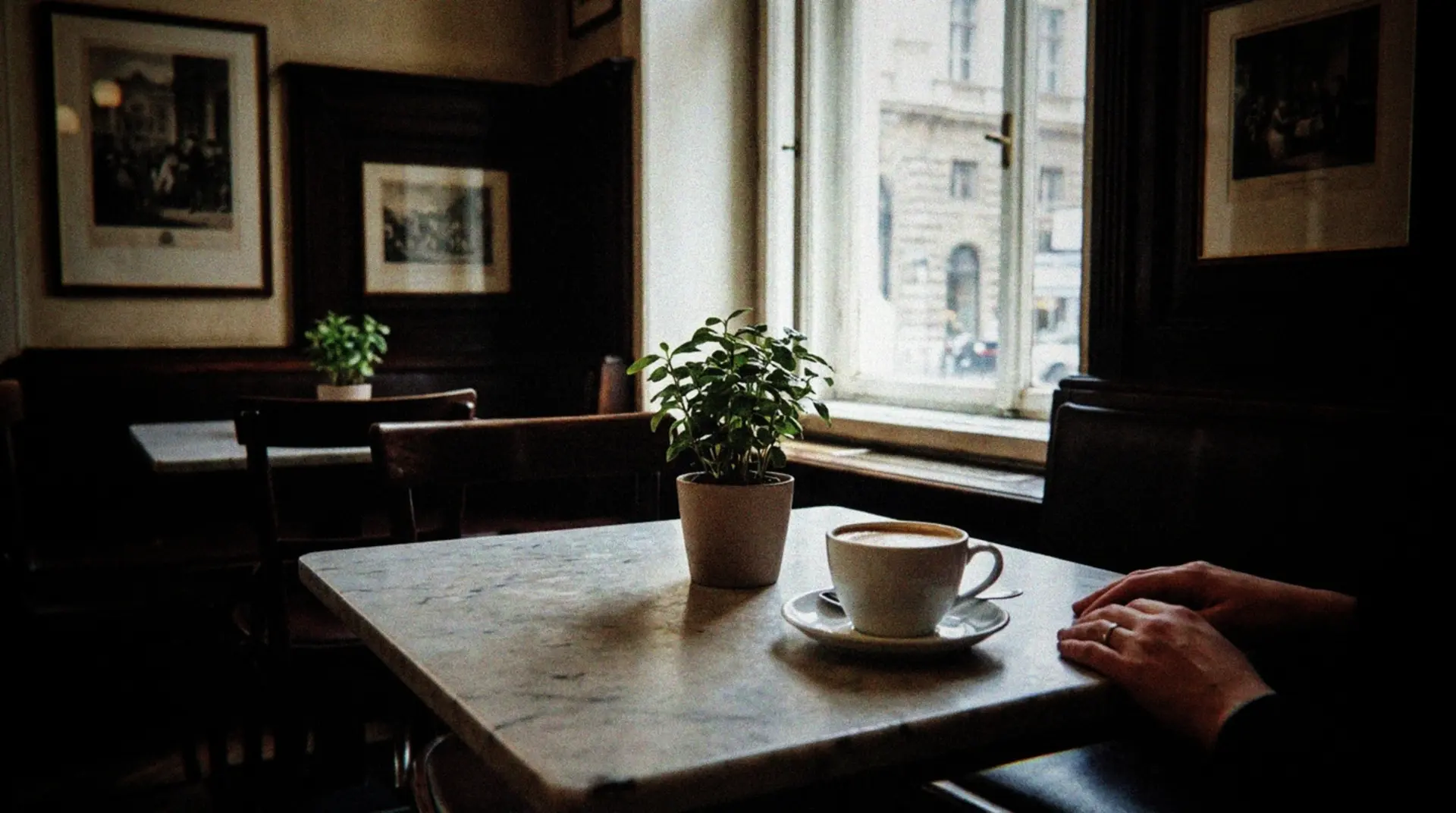
Ah, that special moment when you’re cozied up in a Viennese café, and the afternoon light hits the marble table just right while you sip on a Melange. It’s as if the world hits pause. There’s something unique about Vienna—maybe it’s the stunning architecture, the coffee house culture that’s recognized by UNESCO, or that warm, cozy feeling of Gemütlichkeit. Whatever it is, mindfulness here seems more like a natural flow than just another trendy wellness buzzword.
If you’ve been toying with the idea of starting meditation but keep pushing it aside because it seems too intimidating or just not your thing, I totally get where you’re coming from. The way the wellness world packages meditation often makes it seem like an elusive journey involving costly retreats and spiritual revelations. But let’s simplify it: meditation is really just basic mental hygiene. Starting small can be as easy as taking a few deep breaths before you dive into your morning coffee routine, and Vienna’s serene vibe is just the right backdrop to help you ease into this practice.
This guide is all about creating a lasting meditation habit, borrowing insights from proven mindfulness practices and Vienna’s approach to thinking mindfully about life.
Understanding Meditation Basics (Without the Jargon)
Let’s skip the mystical stuff, yeah? On a scientific level, meditation’s about training your attention and becoming more aware. Studies from places like the Max Planck Institute and Harvard University tell us that regular meditation can actually reshape the brain (neuroplasticity, if you like big words), boosting areas tied to memory and managing emotions.
As you start learning meditation—whether in Vienna or elsewhere—don’t think of it as emptying your mind completely. Research by psychologists Matthew Killingsworth and Daniel Gilbert shows our minds wander around 47% of the time (Science, 2010). So expecting to halt that flow from the get-go is probably setting the bar too high.
What you’re aiming to do is notice things. You’re training your mind to latch onto a single anchor—could be your breath, a sound, a feeling—and whenever it wanders (which it will), you gently guide it back. Imagine it’s like training a puppy. You wouldn’t yell at it for chasing after a squirrel; you’d steer it back to the path with patience. The real exercise isn’t about staying focused but realizing when you’ve strayed and then choosing to return.
The Vienna Mindset: Implicit Mindfulness
Living in Vienna, you pick up on how mindfulness feels like it’s just part of the cultural tapestry, even if the locals aren’t throwing the term around.
The Coffee House Principle:
At a Viennese café, you’re not just buying a coffee; you’re essentially renting a table. It’s the opposite of the grab-and-go culture prevalent in other cities. Sitting there with a cup, simply observing the space and resisting your phone’s pull is a casual form of meditation—being present without any agenda.
The Green Space Connection:
Vienna is incredibly green, with about half the city draped in parks. Places like the Stadtpark or Prater aren’t just routes to another place; they’re spots for Muße—leisure and idleness—and some of the city’s most peaceful meditation spots in Vienna. When you’re on a bench, watching the trees, you’re activating your body’s “rest and digest” mode, finding a tranquil state.
This cultural backdrop makes starting a meditation practice here feel less like adopting something foreign and more like tuning in to a local wavelength.
Creating Your First Daily Meditation Routine
You don’t need fancy tools or a high-priced app to get started. Just three basics: a regular time, a comfy spot, and realistic goals.
Start with Micro-Habits:
The biggest hiccup beginners face is aiming too high. Jumping into a 20-minute session on your first day isn’t the way to do it. Studies on habit-building, like BJ Fogg’s “Tiny Habits” approach, say kicking off with something really small boosts your chances of sticking with it. Begin with just three to five minutes. That’s all you need.
Prioritize Frequency Over Duration:
The science says daily consistency changes your brain more than sporadic, longer sessions. A daily five-minute practice beats a single 45-minute attempt on Sundays. This is not about showing off; it’s about creating a habit.
Morning Meditation: The Coffee Ritual Approach
Deciding to meditate in the morning can be as sacred as a Viennese morning ritual itself.
- The Trigger: Start your day with a glass of water, and don’t look at your phone.
- The Seat: Make yourself comfortable in a chair or sit on the edge of your bed, ensuring your back is straight to breathe easily.
- The Timer: Set it for 5 minutes.
- The Anchor: Close your eyes and focus on how the air feels as it enters your nostrils.
- The Count: Breathe in (1), breathe out (2), all the way to 10, then start over.
- The Return: When your mind drifts to thoughts like your to-do list, simply note it as “thinking” and restart at 1.
This routine helps you start the day with a sense of calm and responsiveness, instead of knee-jerk reactions.
Breathing Techniques Inspired by Architecture
Vienna’s architectural beauty, with its structure and spacing, can double as inspiration for how you breathe to find calm.
Box Breathing (The 4-4-4-4 Method):
Used by top-tier professionals to manage stress, this technique involves a patterned breathing approach:
- Inhale steadily through the nose for 4 seconds.
- Hold it in for 4 seconds.
- Exhale smoothly through the mouth for 4 seconds.
- Hold with empty lungs for another 4 seconds.
Do this for about 3 minutes. It can significantly reduce stress signals, telling your brain you’re in a safe zone.
Diaphragmatic Breathing:
Put one hand on your chest, the other on your belly. Breathe so the hand on your belly rises more than the other. This deep breathing triggers your vagus nerve, acting like a calming brake on stress.
Finding Your Meditation Spot (Even in a Small Altbau)
If you’re living in a cozy Viennese apartment, finding space just for meditation might seem tricky. You don’t need a full room; it’s more about creating a spatial anchor.
This works with context-dependent memory. Meditating in the same spot daily helps your brain associate that place with finding inner peace.
- The Window Nook: Natural light can boost morning alertness.
- The Kitchen Table: Before everyone else stirs, it might just be the quietest spot.
- A Specific Cushion: Even if you stash it away, setting out a special cushion signals it’s time for practice.
If you’re dealing with roommates or family around, popping on noise-canceling headphones with some soothing sounds can carve out your own auditory space.
Dealing with the Wandering Mind
Let’s be real about this: You’ll sit down, aiming to focus, and within moments find yourself plotting dinner or replaying old conversations.
This isn’t failure. It’s actually part of the process.
Mindfulness means waking up from the distraction of endless thoughts. Each time you catch your mind straying, don’t berate yourself. Instead, give yourself a little kudos. That moment—”Oh, I was thinking”—is exactly a moment of mindfulness.
Some days will feel serene. Others might resemble rush-hour chaos on the Ringstraße. Either way, it’s okay. Your meditation isn’t judged by how serene your mind is, but by your willingness to sit through whatever comes up.
Evening Wind-Down: The Spaziergang for the Mind
Just as the Viennese love an evening stroll (Spaziergang) to wind down, meditation can help you transition into sleep.
The Body Scan:
- Lie in bed.
- Focus on your toes, clench them for a second, then relax.
- Move onwards to your calves, knees, thighs, and hips, repeating the tense-and-relax cycle.
- Keep working upwards to your forehead.
This routine, known as Progressive Muscle Relaxation, can really help shorten the time it takes to fall asleep, easing out the day’s tensions.
Common Beginner Mistakes
- Waiting for Silence: If perfect quiet or a calm mind is the goal before starting, you’ll never begin. Instead, meditate with the noise around you, treating it as background rather than distraction.
- Judging the Session: There’s no such thing as a “bad” session if you sat down to try. Those difficult days often build the most “mental muscle.”
- Over-consuming Theory: Reading about meditation isn’t the same as doing it. Step away from the books, set that timer, and just start.
Building Consistency Through “Habit Stacking”
To make this stick, use the power of Habit Stacking, linking your new practice to something already well-ingrained.
- Right after starting the coffee maker, do 3 minutes of breathing.
- Once you’ve brushed your teeth at night, do a body scan.
Keep track of it visually. Marking a simple check on a calendar can satisfy your brain’s drive for rewards, reinforcing your identity as “someone who meditates.”
Conclusion
Starting a daily meditation practice doesn’t mean you have to become a different person. You just need a few minutes, a little willingness to sit with yourself, and the understanding that it’s a skill developed over time.
Vienna offers a lovely example of this: a culture that values pausing, cherishes the moment, and sees that life is best lived by truly being there for it. You don’t need a monastery. You just need a seat, closed eyes, and that first breath.
FAQs
What is the best time of day for beginner meditation?
Honestly, the best time is whenever you’ll actually make it happen. Morning meditation can help manage those early stress levels, but if you’re a night owl, an evening routine works wonders for winding down.
How long should I meditate as a complete beginner?
Start small—3 to 5 minutes each day. Consistent short practices trump long, irregular sessions in effectiveness. As you get more comfortable, you might expand to 10 or 15 minutes after a few weeks.
Is it normal for my mind to wander constantly?
Yes, absolutely. Researchers suggest our minds wander up to 50% of the time in waking life. Meditation isn’t about eliminating wandering but reducing how long it takes to bring yourself back.
Do I need special equipment or apps?
Nope. Apps like Headspace or Calm are helpful but not essential. You already have your breath as a portable tool. Don’t let the lack of gear hold you back from starting.
How soon will I see results?
Meditation is one of those subtle practices where the magic builds over time. While enlightenment might not hit you after a week, many find reduced anxiety and improved focus after about two months. Trust the process to gradually evolve.