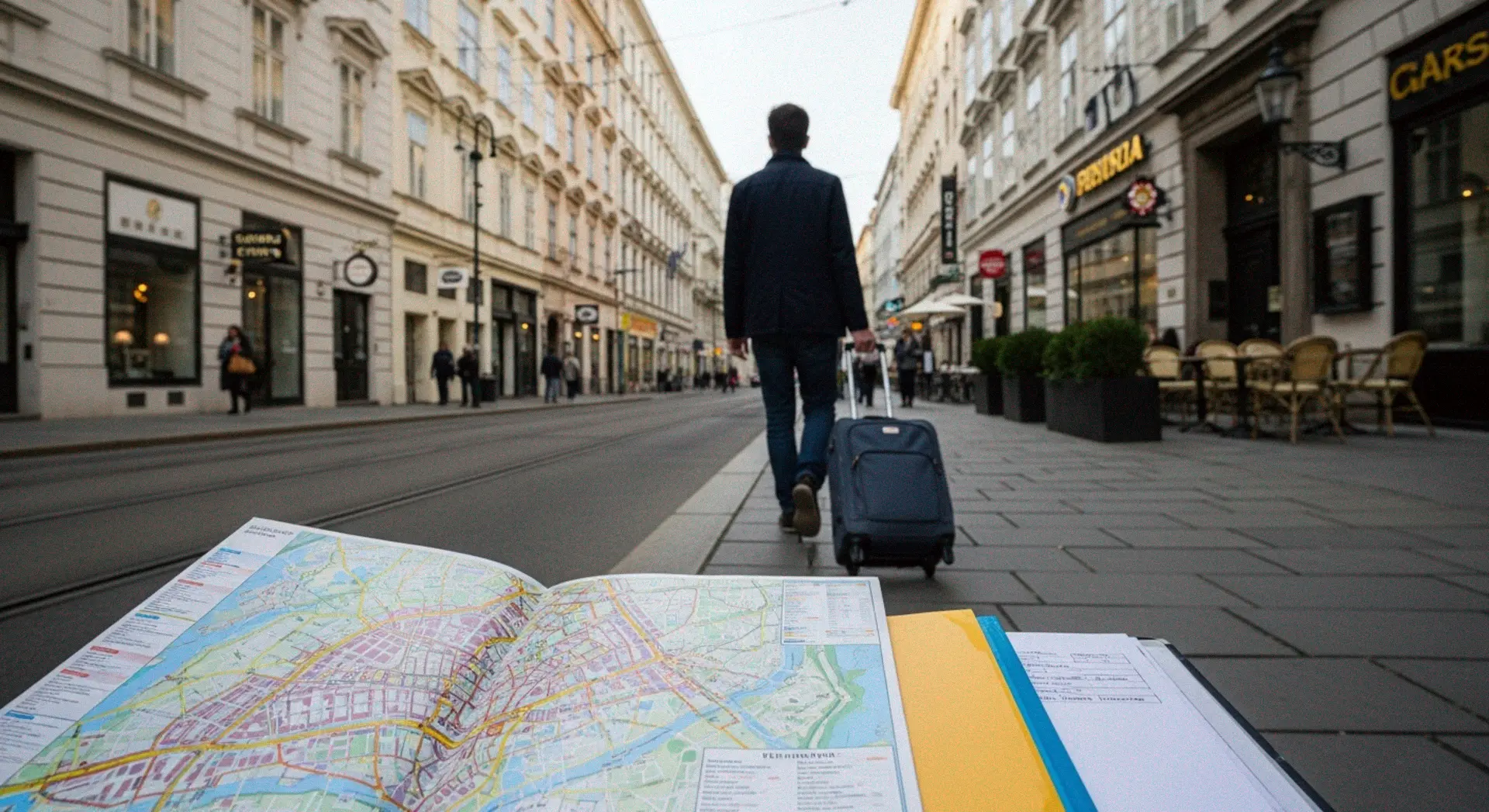
So, you’re actually doing it. You’ve decided that relocating to Vienna is your next chapter. It is a brilliant choice—Mercer and the Economist Intelligence Unit’s Global Liveability Index consistently rank it as the world’s most livable city for a reason. But let me be honest with you: moving to Vienna isn’t just about booking a flight and finding a flat. It is about navigating a complex web of paperwork, specific bureaucracy, and unwritten social rules that can stifle the unprepared.
I’ve been through this process, and I’ve watched friends navigate it—some breezed through, while others hit walls they never saw coming. The difference is preparation. This guide strips away the fluff to focus on the operational realities of settling in Austria’s capital.
Before You Arrive: Essential Document Prep
Most guides gloss over the administrative hurdles that begin before you leave your home country. Vienna runs on paper, and the authorities possess an eagle eye for authentication.
First, understand the Apostille. If you are coming from outside the EU (a ‘Third Country National’), your documents—birth certificate, marriage certificate, university degrees, and police clearance records—must be legalized. Austria is a signatory to the Hague Convention, meaning an Apostille is usually sufficient, but authorities will reject documents without it. Do this at home; doing it from abroad is a logistical nightmare.
Second, financial proof. You need liquidity. While Vienna is more affordable than Zurich or London, initial costs are high. Have at least three to four months of living expenses liquid in a bank account. Immigration authorities (MA 35) legally require proof of sufficient funds for your residence permit—currently about €1,217 per month for singles and €1,921 for couples (2024 rates, technically ‘Ausgleichszulagenrichtsatz’).
Visas and Residency: Navigating Austrian Immigration
If you are an EU/EEA citizen, the process is straightforward but not paperwork-free. You do not need a visa, but if you stay longer than three months, you must apply for a Anmeldebescheinigung (Registration Certificate) within four months of arrival. Failing to do this can result in fines.
For Non-EU citizens, your strategy depends entirely on your status:
- Employed: You generally need the Red-White-Red Card (Rot-Weiss-Rot Karte), a points-based system for qualified workers. Your employer usually initiates this.
- Job Seeker: Highly qualified individuals can apply for a six-month Job Seeker Visa to come to Austria and look for work.
- Freelancers/Self-Employed: You need a specific residence permit for self-employment. Note that this is difficult to obtain unless you can prove your business has a designated benefit to the Austrian economy and you have significant capital.
Pro Tip: Start your application at least four months before your move. Austrian immigration processing times can stretch from 8 weeks to several months.
Finding Your First Home: The Market and The Kitchenless Reality
Finding an apartment in Vienna comes with a unique shock for international movers: The Missing Kitchen.
Many long-term rentals (Altbau or Neubau) are rented truly unfurnished—meaning bare walls, no light fixtures (just wires hanging from the ceiling), and often no kitchen cabinetry or appliances. You are expected to buy and install your own kitchen. Budget €3,000–€5,000 for a basic setup if you rent an empty unit.
The “Bestellerprinzip” Change (2023): There is good news. As of July 2023, a new law mandates that whoever commissions the real estate agent pays the commission (Provision). In the past, tenants almost always paid a fee equal to two months’ rent. Now, if you are responding to a listing online, the landlord usually pays this fee. This has significantly lowered moving costs.
Where to live?
- Districts 6, 7, 8 (Mariahilf, Neubau, Josefstadt): Urban, hip, expensive, very international.
- District 2 (Leopoldstadt): Between the Danube Canal and the Prater park. Trendy and green.
- District 9 (Alsergrund): Academic, close to the center, beautiful architecture.
- Districts 3 & 4 (Landstraße, Wieden): Diplomatic quarters, central, slightly quieter.
Avoid the 1st District unless you have an unlimited budget. For your first 3 months, book a temporary furnished flat (e.g., via specialized platforms like Kurzzeitwohnen) to register your address while you hunt for a permanent home.
Setting Up Banking and Financial Essentials
You cannot function here without an Austrian IBAN. Your landlord will likely refuse international transfers for rent, and your salary must go to a SEPA-compliant account.
Traditional banks like Erste Group, Raiffeisen, and Bank Austria are reliable and offer heavy physical presence. However, they often require a visit in person. Newer digital banks or “Neobanks” (like N26 or Revolut) are widely accepted and easier to set up instantly, though having a local branch is helpful if you lose a card.
Cash Culture: Despite modernization, Vienna remains a cash-heavy city. Many traditional cafés (Kaffeehäuser), smaller shops, and even some medical practices do not accept cards. Always carry €50–€100 in cash.
Healthcare: Understanding E-Cards and Physicians
Austria’s healthcare system is world-class. If you are employed, you are automatically enrolled in the public insurance system (ÖGK – Österreichische Gesundheitskasse). You will receive an e-card, your key to the medical system. As of 2024, new e-cards require a photo; you may need to register your photo with the police if you don’t have an Austrian passport or driver’s license.
Finding a Doctor:
- Kassenarzt: A doctor who accepts public insurance directly. You pay nothing or very little.
- Wahlarzt: A private doctor. You pay upfront and submit the invoice to ÖGK for partial reimbursement (usually up to 80% of the standard public rate, which often equates to only 30-50% of the actual bill).
If you need English-speaking doctors, the website Praxisplan.at (run by the Medical Association of Vienna) allows you to filter physicians by foreign languages spoken.
Registering Your Address (Meldezettel): The Golden Ticket
This is the cornerstone of Austrian bureaucracy. Austrian law (Meldegesetz) requires you to register your address within three days of moving into any residence.
You need a Meldezettel form signed by your landlord or the main tenant. Take this, along with your passport, to any Magistratisches Bezirksamt (District Office). You can book appointments online to skip the queue.
Without the Meldezettel confirmation (officially called the Bestätigung der Meldung), you cannot open a bank account, sign a phone contract, or get a library card. It is the first document anyone will ask for.
Public Transport: Wiener Linien and The €365 Pass
Vienna possesses one of the best public transport networks globally. You generally do not need a car.
Buy the Jahreskarte (Annual Pass). It costs exactly €365 if you pay upfront (or slightly more in monthly installments). This gives you unlimited travel on all subways (U-Bahn), trams (Bim), and buses. Considering a single ticket is €2.40, the pass pays for itself quickly.
Important: Ticket validation is taken seriously. There are no turnstiles, but plainclothes inspectors (“Schwarzkappler”) patrol frequently. The fine for riding without a ticket is currently €135 (if paid immediately) or higher if paid later. Do not risk it.
Language: Do You Really Need German?
Can you survive in Vienna with only English? Yes. Will you feel at home? No.
Workplaces and expat bubbles operate in English. However, dealing with tradespeople, government officials, or elderly neighbors usually requires German. More importantly, learning the language is a sign of respect that softens the sometimes-gruff Viennese exterior.
Be prepared for Wienerisch, the local dialect. Even if you speak high German (Hochdeutsch), you might struggle to understand a “Heurigen” waiter or a market vendor. Don’t be discouraged; they will usually switch to standard German if they see you are trying.
Social Circles: Breaking the ‘Coconut’ Shell
Cultural theorists sometimes describe cultures as Peaches (soft outside, hard pit) or Coconuts (hard shell, soft inside). Austria is a Coconut culture.
Viennese people are not unfriendly, but they are reserved. They generally do not engage in “superficial” friendliness. It takes time to crack the shell, but once you do, friendships are loyal and deep.
To build a circle faster:
- Vereine (Clubs): Austrians love organized hobbies. Join a hiking club, a choir, or a sports league.
- Stammtisch: Regularly visiting the same pub or café can eventually lead to conversation.
- Expat Groups: While you should integrate, organizations like Vienna Internations or specific Facebook groups help bridge the initial loneliness gap.
Viennese Etiquette: Unwritten Rules to Live By
- Greeting: Always say “Grüß Gott” (formal) or “Hallo” when entering a small shop, elevator, or waiting room. Say “Wiederschauen” when leaving. Silence is considered rude.
- Sunday Silence: Sundays are sacred. Shops are closed (except at train stations). Lawn mowing, drilling, or loud music is socially (and sometimes legally) forbidden.
- The Titling Game: Austrians love academic/professional titles. If someone introduces themselves as “Magister” or “Doctor,” use that title until invited otherwise.
- Escalators: Stand right, walk left. This is strictly enforced by fellow commuters during rush hour.
Cost of Living: A Realistic Budget Breakdown
Vienna is getting more expensive, but remains reasonable compared to Paris or Munich. Here is a realistic monthly baseline for a single professional in 2024:
- Rent (warm, incl. heating/water): €900–€1,300 for a 1-bedroom (40–50m²) in a good district.
- Groceries: €300–€400.
- Internet/Phone: €40–€60.
- Transport: €33 (pro-rated annual pass).
- Public Broadcasting Fee (OBS): Approx. €15 per household/month (mandatory even if you don’t watch TV).
- Household total: Expect base fixed costs of €1,500–€2,000 before leisure and savings. Couples benefit efficiently from shared rent.
Conclusion: Making Vienna Home
Relocating to Vienna is a commitment to a slower, more deliberate pace of life. You will encounter moments of frustration—usually involving a form, a stamp, or a closed shop on a Sunday when you need milk. But these are small prices to pay.
In exchange, you get a city that functions incredibly well. You get safety, drinkable tap water that tastes like alpine springs, affordable culture, and a work-life balance that is actually respected. Be patient with the city, and eventually, the city will open up to you.
FAQs About Relocating to Vienna
How long does it take to get a residence permit?
Processing times vary by nationality and permit type, but generally, expect 3 to 4 months for a Red-White-Red Card. It is crucial to submit all documents exactly as requested (apostilled and translated) to avoid delays. Once granted, renewals are much faster.
What is the deposit (Kaution) for an apartment?
Prepare for high upfront costs. The standard security deposit is 3 months’ gross rent. While commission fees for tenants have largely been abolished, you still need significant cash on hand (often €3,000–€4,500) just to sign the lease.
Do I need health insurance before I arrive?
Yes. You cannot obtain a residence permit without proof of “all-risks” health insurance coverage. If you are starting a job immediately, your employment confirms this. If you are a job seeker or student, you may need to purchase private travel health insurance that meets specific coverage limits (usually €30,000 minimum) until your Austrian insurance kicks in.
Is Vienna dog-friendly?
Extremely. Dogs are welcome in many restaurants and cafés (if they are well-behaved), and on public transport (must wear a muzzle and have a half-price ticket). You must register your dog and pay an annual dog tax (Hundeabgabe), currently €72 for the first dog.
Can I drink the tap water?
Yes, and you should. Vienna’s tap water comes directly from the Styrian Alps via mountain spring pipelines. It is among the highest quality tap water in the world and is often better than bottled water.