Seasonal Events in Vienna: A Month-by-Month Guide to Local Celebrations
Vienna doesn’t just host events; the city breathes in time with them. There is a distinct, rhythmic pulse to life in the Austrian capital that becomes undeniable once you’ve experienced a full yearly cycle. Locals don’t merely attend festivals; we anticipate them, plan our social lives around them, and uphold them with a dedication that borders on the religious.
If you are planning a visit or settling in as a new resident, understanding the seasonal events Vienna offers will fundamentally change your experience. This isn’t about ticking boxes on a tourist itinerary—it is about syncing your life with centuries-old traditions that remain vibrant and essential to the city’s modern identity.
January: New Year Concerts and the Ice Dream
The year begins with the world’s most famous classical music event: the Vienna Philharmonic New Year’s Concert (Neujahrskonzert) at the Musikverein. While securing tickets inside the Golden Hall requires winning a highly competitive lottery held nearly a year in advance, the city ensures everyone participates.
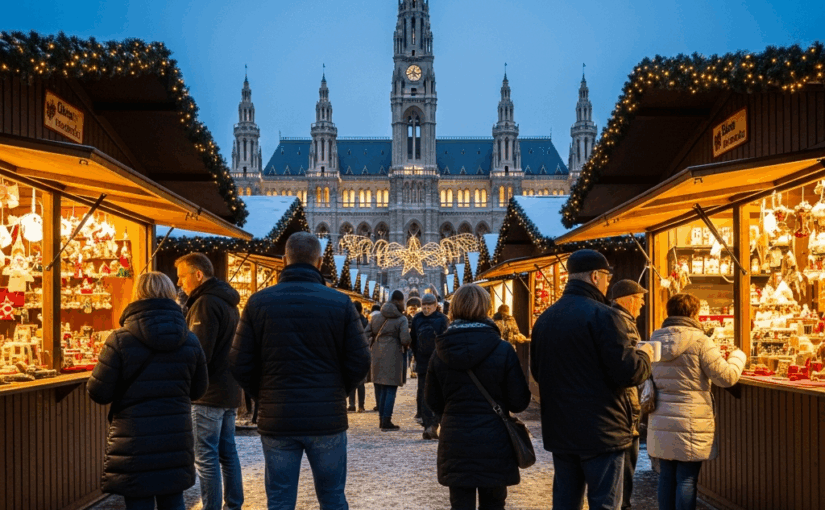
The concert is broadcast live on giant LED screens at the Rathausplatz (City Hall Square) and typically at the square in front of the Vienna State Opera. My preferred tradition is joining the crowds at the Rathausplatz “Winter Market.” There is a distinct magic to hearing the “Blue Danube” Waltz echo across the square while bundled in wool, sipping hot Glühwein (mulled wine) or Punsch.
Mid-January brings the Wiener Eistraum (Vienna Ice Dream) to the Rathausplatz. This is not a simple rink; it is a sprawling, two-level ice landscape with 9,500 square meters of skating paths winding through the park’s illuminated trees. It typically runs until early March. Renting skates is seamless, and gliding past the neo-Gothic City Hall at night remains one of the most atmospheric experiences of the winter.
February: Fasching and the Peak of Ball Season
While Rio has Carnival, Vienna has Fasching and the majestic Ball Season. Vienna hosts over 450 balls annually, with the season reaching its zenith in February. While the Opera Ball is the most globally televised, it is just one constellation in a galaxy of events ranging from the Bonbon Ball to the prestigious Kaffeesiederball (Coffeehouse Owners’ Ball) at the Hofburg.
Newcomers often fear the strict etiquette, but the reality is welcoming. I attended a smaller ball my first year and found that the dreaded “fear of waltzing” was unfounded. While knowing the basic steps helps, the atmosphere is communal. The key is adherence to the dress code—floor-length gowns and tuxedos (or dark suits for smaller balls) are non-negotiable.
Culinary tradition dictates the consumption of Krapfen—fluffy doughnuts traditionally filled with apricot jam—during Fasching. According to the Vienna Chamber of Commerce, Austrians consume roughly 100 million of them per season. You will see them in every bakery window; eating at least one is practically a civic duty.
March: Easter Markets and Artisan Craft
As winter recedes, the Ostermärkte (Easter Markets) transform squares like Am Hof, Freyung, and the Schönbrunn Palace courtyard. Unlike the cozy darkness of Christmas markets, these are celebrations of light and renewal. They typically open about two weeks before Easter Sunday.
The focus here is heavily on Kunsthandwerk (artisan craft). At the Freyung market, framed by the Schottenkirche, you can watch masters demonstrate Ostereier (Easter egg) painting. These aren’t simple dip-dved eggs; they feature intricate beeswax resist techniques or drill-carved shells. I purchased a hand-painted set years ago that remains a centerpiece of my spring decor.
The weather in March is notoriously fickle—locals joke about “April weather” arriving early—but this is when the Schanigärten (gastronomic gardens) theoretically open. Seeing the first Viennese claiming outdoor cafe tables, wrapped in blankets and facing the sun, is the true first sign of spring.
April: The Heurigen Awaken and Cherry Blossoms
April marks the unofficial start of the Heuriger (wine tavern) season. While some taverns are open year-round, spring is when the experience shines. Located in the vineyard districts like Grinzing, Nussdorf, and Stammersdorf, these family-run establishments serve their own “young wine” (Heuriger) alongside rustic buffets.
Look for a bundle of pine branches (Buschen) hanging above the entrance door; this signal, legally codified since 1784, indicates the winemaker is open and serving. Taking the D-tram to Nussdorf and hiking up through the budding vines before settling onto a wooden bench for a Gemischter Satz (Viennese field blend wine) is an essential rite of spring.
For floral enthusiasts, the cherry blossoms bloom in April. While the Hainesdorfer Weg offers density, the Japanese Setagaya Park in the 19th district is the insider favorite. It is a tranquil, manicured space that feels entirely transported from Kyoto, peaking in color usually by mid-month.
May: Wiener Festwochen and Outdoor Living
May brings the Wiener Festwochen (Vienna Festival), a massive cultural undertaking that spans five weeks of theater, performance art, and music. It often kicks off with a grand, free open-air opening event at Rathausplatz that rivals any pop concert in scale.
Simultaneously, the MuseumsQuartier (MQ) fully reactivates. The famous “Enzi” furniture—geometric outdoor loungers—dominates the main courtyard. This space becomes the city’s living room, where students, creatives, and bankers mix freely.
Late May often sees the Genussfestival in the Stadtpark, where top artisan food producers from legendary Austrian regions (like Styria and Carinthia) set up tents. It is the best place to sample high-quality pumpkin seed oil, gray cheese, and farm-cured ham without leaving the city center.
June: Donauinselfest and Pride
June defines Vienna’s summer energy. The headline event is the Donauinselfest (Danube Island Festival), typically held late in the month. It creates a staggering statistic: it is Europe’s largest open-air festival with free admission, attracting roughly 2.5 to 3 million visits over a single weekend. The island stretches for kilometers with multiple stages featuring everything from Austropop to electronic music.
My advice: Avoid trying to see it all. Pick one stage or “island” area and settle in. The vibe is surprisingly relaxed given the crowd size, functioning like a massive neighborhood block party.
June is also Pride Month. The Regenbogenparade (Rainbow Parade) circles the Ringstraße “against traffic” (counter-clockwise), symbolizing the reversal of old norms. It draws around 300,000 participants and turns the historic boulevard into a vibrant celebration of diversity, finishing with a party at Rathausplatz.
July: Film Festival and Open-Air Cinema
Throughout July and August, the Film Festival auf dem Rathausplatz dominates the evenings. This is the largest event of its kind in Europe. A massive screen in front of City Hall shows free productions of opera, ballet, and classical concerts (and occasionally pop legends like Queen or Falco) as the sun sets.
The culinary aspect is equally important. Dozens of gourmet food stalls run by top local restaurants surround the seating area. Unlike typical fairground food, this is proper dining—offering everything from fresh Kaiserschmarrn to international cuisine—served on real plates.
For a more indie vibe, seeking out the Kino am Dach (Cinema on the Roof) atop the main library on the Gürtel offers arthouse films with a grittier urban view. It usually runs from June through September.
August: The Neustifter Kirtag
While the city center slows down as locals depart for vacation, August holds a secret gem: the Neustifter Kirtag. Usually held in late August in the winemaking village of Neustift am Walde (on the city outskirts), this is Vienna’s answer to Oktoberfest, but far more authentic.
Hundreds of locals dress in Tracht (Dirndls and Lederhosen) for a weekend of wine drinking, traditional parades, and processions involving the “Hiatabaum” (guardians’ tree). It is rowdy, joyful, and deeply traditional. Seeing the juxtaposition of modern Viennese youth and elderly vintners celebrating together encapsulates the city’s ability to bridge generations.
September: Wine Hiking and Harvest
September brings my personal favorite event: the Wiener Weinwandertag (Vienna Wine Hiking Day). Usually held on the last weekend of September or early October, the city opens up private vineyard paths that are otherwise closed to the public.
Routes wind through the 19th, 21st, and 23rd districts, dotted with “lab stations”—pop-up wine stands run by the vineyards—serving Sturm. Sturm is fermenting grape juice, available only during harvest. It is cloudy, sweet, sparkling, and deceptively potent. Hiking from tavern to tavern with a glass in hand, overlooking the Danube and the city skyline, creates a “golden hour” memory that defines Viennese autumn.
October: Long Night of Museums
Organized by the ORF (Austrian Broadcasting Corporation), the Lange Nacht der Museen (Long Night of Museums) typically occurs on the first Saturday of October. A single ticket grants access to around 700 museums and galleries throughout Austria from 6:00 PM to 1:00 AM.
The joy here is democratized culture. Shuttle buses connect the venues, and you will see lines of enthusiastic residents hopping between the Kunsthistorisches Museum and smaller oddities like the Funeral Museum or the Crime Museum. Special programming, backstage tours, and rooftop cocktails at the Museum of Natural History make institutions feel like vibrant social hubs.
November: St. Martin’s and Advent Beginnings
November 11th is St. Martin’s Day, marking the culinary season of Martinigansl. Restaurants across the city serve roast goose with red cabbage and potato dumplings. It is a beloved tradition, so reservations for a goose dinner are essential, often weeks in advance.
By mid-November, the first Christmas markets open. While tourists flock to December, locals know that late November is the sweet spot. You can visit the Spittelberg market—woven through narrow Biedermeier alleyways—or the elegant Art Advent market at Karlsplatz before the crushing crowds arrive. The official lighting of the tree at Rathausplatz acts as the starting gun for the festive season.
December: Silvesterpfad and the Pummerin
In December, the city glows. Chandeliers hang above the Graben and Kärntner Straße. The markets are in full swing—my recommendation is the market at Maria-Theresien-Platz for its backdrop between the twin museums.
The year culminates on New Year’s Eve (Silvester). The Silvesterpfad (New Year’s Trail) turns the entire First District into a party zone with stages and food stalls. But the true Viennese moment happens at midnight.
At the stroke of 12, the Pummerin—the massive bell of St. Stephen’s Cathedral—rings. Simultaneously, the radio stations broadcast the “Blue Danube” Waltz. In the streets, squares, and even apartment living rooms, everyone grabs a partner and waltzes into the new year. It is chaotic, beautiful, and utterly unique to Vienna.
Conclusion: Living the Rhythm
After navigating these seasons, I’ve realized that Vienna’s events aren’t just entertainment—they are the city’s clock. They create community and maintain a tangible connection to history without feeling dusty or staged.
Most remarkably, the barriers to entry are low. The Danube Island Festival, the Film Festival, and the Wine Hiking Days are free. The city views culture not as a luxury product for the elite, but as a public utility to be shared. By stepping into this calendar, you stop being a spectator and start inhabiting the city as the locals do—one waltz, one Sturm, and one festival at a time.
FAQs
When is the best time to visit Vienna for local vibes?
While December attracts the most tourists for Christmas markets, September and June are the locals’ favorites. June offers the Festival of Vienna, Pride, and the Danube Island Festival with generally great weather. September offers the wine harvest, hiking days, and mild temperatures without the peak summer crowds.
Are Vienna’s major events expensive?
Surprisingly, no. Vienna heavily subsidizes public culture. The Donauinselfest, Film Festival at Rathausplatz, and entry to Christmas markets (though not the food) are free. Standing room tickets for the State Opera can cost as little as €3 to €10, making even elite culture accessible.
Do I need tickets for the Christmas Markets?
No, entry to the markets is free. You only pay for what you eat or buy. However, bring cash. While card payment is becoming more common, many smaller artisan stalls and Glühwein stands still crave traditional cash.
Can I attend a Ball if I don’t speak German?
Yes. Vienna is an international city, and English is widely spoken at balls. The most important requirement is not language, but attire. Adhering to the strict dress code (floor-length dresses, tuxedos, tails, or dark suits depending on the ball) is the only “ticket” you need to be accepted socially.
Is the “New Year’s Concert” free to watch?
The concert inside the Musikverein is expensive and requires a lottery win. However, the live broadcast on the giant screen at Rathausplatz is completely free, open to the public, and offers a festive communal atmosphere that many locals prefer over the formal indoor event.